




















The UAE News Report
Sharjah: Artificial intelligence can help creative professionals save time and improve productivity, but it cannot replace human imagination, artistic identity or original thought, writers and artists told audiences at the 45th Sharjah International Book Fair (SIBF 2026).
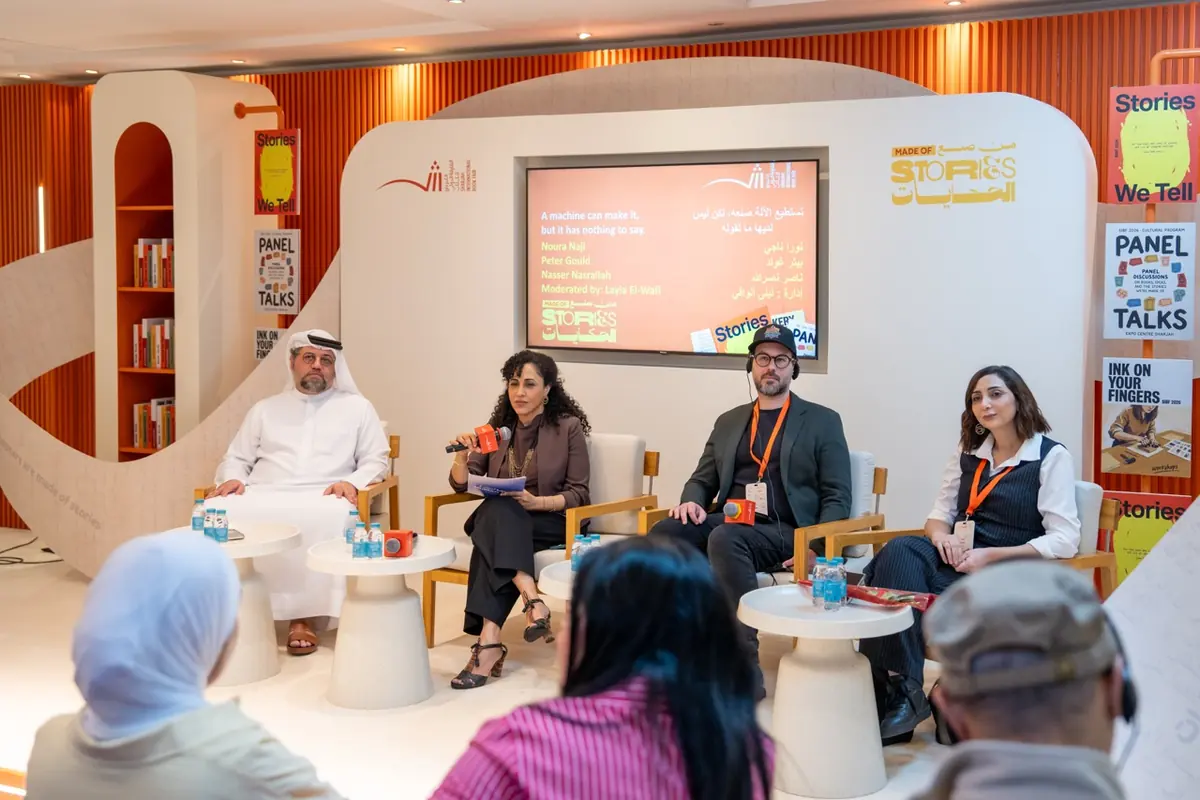
The discussion, titled The Machine Can Make It. But It Has Nothing to Say, brought together Australian designer and author Peter Gould, Egyptian novelist and journalist Noura Nagi, and Emirati visual artist and writer Nasser Nasrallah. Moderated by Layla Al Safi, the session examined how people working in creative industries can use AI without allowing it to define the work they produce.
Human imagination versus AI-generated content
Gould, who is also a UNHCR Ambassador and the author of The Heart of Design, said AI can be useful for repetitive and time-consuming activities. By handling routine work, such tools can give people more room to concentrate on ideas and tasks that require creative judgement.
He nevertheless warned against asking technology to take over the creative process itself, drawing a distinction between producing material from existing information and imagining something new.
“Humans are creative, and AI is generative. Humans use our imagination to think forward and design the future, and AI just uses data from the past,” Gould said.
His comments framed AI as a tool that can contribute to the process surrounding creative work, rather than a replacement for the human decisions that shape its meaning. The distinction was central to the panel’s discussion of technology’s growing influence on design, literature and visual art.
AI as an assistant, not an artist
Nasrallah, an Emirati visual artist and writer known for works including Project Corniche, described a similar division in his own practice. He said he uses AI to support administrative work, including planning and setting reminders, while retaining direct responsibility for making art.
“I use AI like my assistant, and that helps me save time, but I would not advise one to use it in their creative process,” he said.
The example illustrated a practical use of AI that does not require artists to delegate the creation of their work. Instead, the technology is used for organisational tasks, leaving the artistic decisions with the person producing the work.
Writers defend the individual voice
Nagi, whose literary works include Bana (2015), The Wall (2016) and The Pasha’s Daughters (2017), focused on the importance of a writer’s personal voice. She cautioned that depending excessively on AI in the writing process could reduce the originality that makes an author’s expression distinctive.
“AI lacks the personal identity and depth found in human-authored literature,” Nagi said.
Her remarks added a literary perspective to the discussion, placing emphasis on the experience and individual outlook a writer brings to the page. For the panellists, the value of creative work was not limited to producing a finished text, image or design; it also lay in the thought and perspective behind it.
Although the speakers acknowledged AI’s practical advantages, they shared concerns about allowing automated systems to substitute for independent thinking. Their discussion highlighted the difference between tools that make creative work more manageable and reliance on generated content to supply the ideas themselves.
Sharjah Book Fair hosts debate on technology and creativity
The session was part of the cultural programme at the 45th Sharjah International Book Fair, organised by the Sharjah Book Authority. The fair runs from 4 to 15 November 2026 at Expo Centre Sharjah under the theme Made of Stories, with the Sultanate of Oman as Guest of Honour.
According to organisers, the event brings together 3,212 publishers and exhibitors from 126 countries and showcases more than 1.7 million titles. Its programme features 1,500 cultural, creative and artistic activities involving 106 guests from 25 countries.