

























The UAE News Report
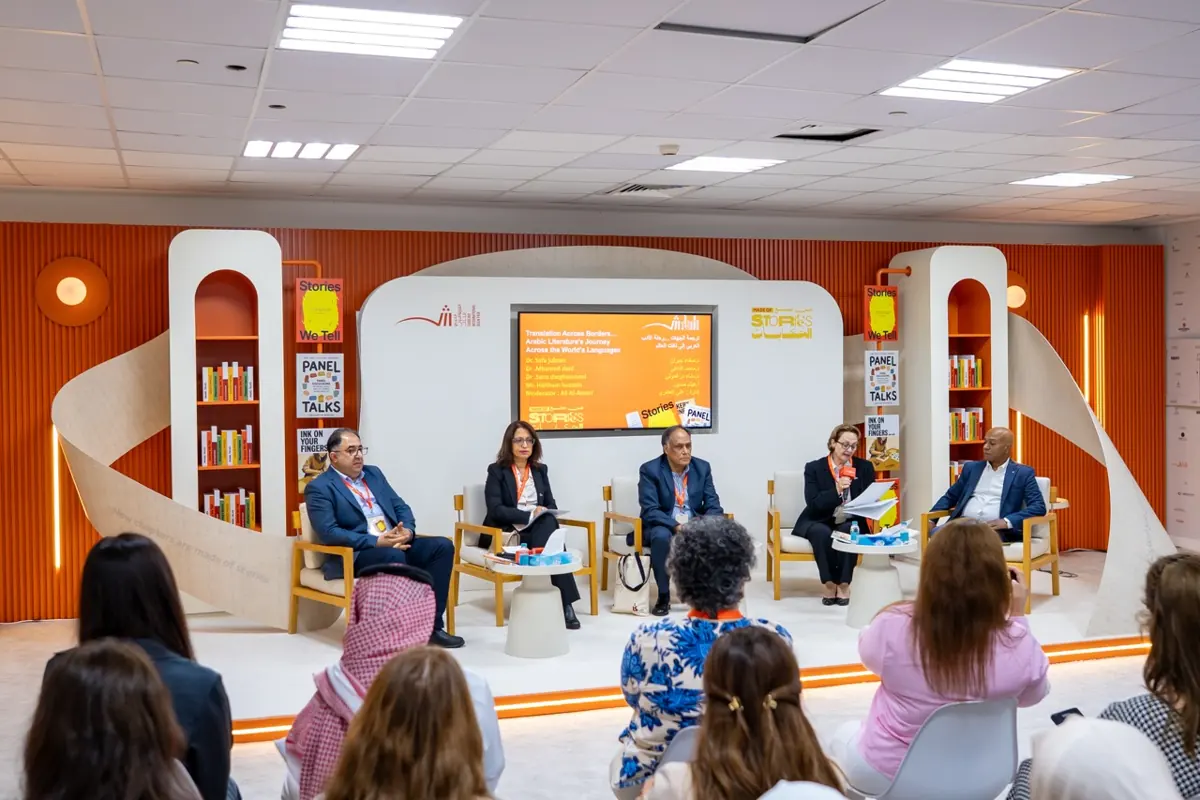
Sharjah: Translating Arabic literature for international audiences requires more than finding equivalent words in another language, according to writers, critics and translators who discussed the cultural and publishing challenges facing the region’s books at the 45th Sharjah International Book Fair (SIBF 2026).
The session, organised by Kitab Magazine and moderated by Ali Al-Ameri, brought together Dr Safa Jubran, Dr Mhamed Dahi, Dr Sana Darghmouni and Haitham Hussein. Speakers examined how translators convey cultural identity, how publishing choices affect international interest and why translated books need support to reach readers.
Preserving meaning beyond the words
Dr Safa Jubran, a Lebanese-Brazilian academic and literary translator working between Arabic and Portuguese, said effective translation depends on understanding the history, culture and political context behind the language being used.
“Translation is not simply about finding an equivalent word in another language. It is about conveying the soul of the expression, its context and the world from which it emerges,” she explained.
Her remarks highlighted a central challenge for literary translators: transferring a work into a different language while retaining the ideas, associations and experiences that give its original expressions meaning. For Arabic literature, those considerations can be especially important when readers approach the translated text from a different cultural background.
How Arabic literature travelled internationally
Moroccan literary critic Dr Mhamed Dahi explored the people and networks that have helped introduce Arabic writing to audiences outside the region. He referred to French translations of works by Nobel Prize-winning novelist Naguib Mahfouz as an example of literature reaching readers through another language.
Dahi also pointed to Arab intellectuals and members of the diaspora who studied in Western countries, alongside Orientalist translators whose work helped present Arabic literary texts to foreign readers.
“The journey of Arabic literature into other languages has been carried, in large part, by people who understood both its cultural foundations and the literary traditions of the languages into which it was translated,” he observed.
The discussion placed translators within a wider literary exchange, recognising that the route from an original Arabic work to a new readership involves both knowledge of the source culture and familiarity with the expectations of the target literary tradition.
Challenging narrow representations
Dr Sana Darghmouni, a Moroccan professor of comparative literature who has translated Mahmoud Darwish’s work into Italian, addressed the way translated books can challenge established perceptions of Arab societies.
She said literature in translation could move readers beyond portrayals of the Arab world as exotic or fundamentally different from European cultures, allowing them to encounter a broader range of experiences and perspectives.
“Literary translation has helped us move beyond these limited representations by presenting the diversity of Arab literature and placing Arab experiences within the broader framework of human experience,” she said.
Darghmouni acknowledged that literary awards can draw attention to Arab writers internationally. However, she cautioned that decisions about which works are translated are also shaped by publishers’ priorities, commercial considerations and translators’ own perceptions.
Translation alone does not guarantee readers
Kurdish-Syrian novelist, translator and critic Haitham Hussein raised a further issue: the limited visibility that some translated Arabic books receive even after a strong translation has been completed.
He noted that Arabic works translated into English can struggle to attract attention despite the quality of the translation, making promotion, distribution and literary discussion important parts of their international journey.
“The translator may do an excellent job of bringing a literary work into English, but translation alone does not guarantee that the book will reach readers. There is also a need to invest in making these works visible and bringing them into the conversations of literary audiences,” he said.
His remarks underscored the distinction between making a book available in another language and building a sustained audience for it. The panel’s discussion brought together questions of translation quality, cultural understanding and the publishing systems that determine what readers encounter.
Organised by the Sharjah Book Authority, SIBF 2026 runs from 4 to 15 November at Expo Centre Sharjah under the theme Made of Stories, with Oman as Guest of Honour. Organisers said the fair features 3,212 publishers and exhibitors from 126 countries, more than 1.7 million titles and 1,500 cultural, creative and artistic events.